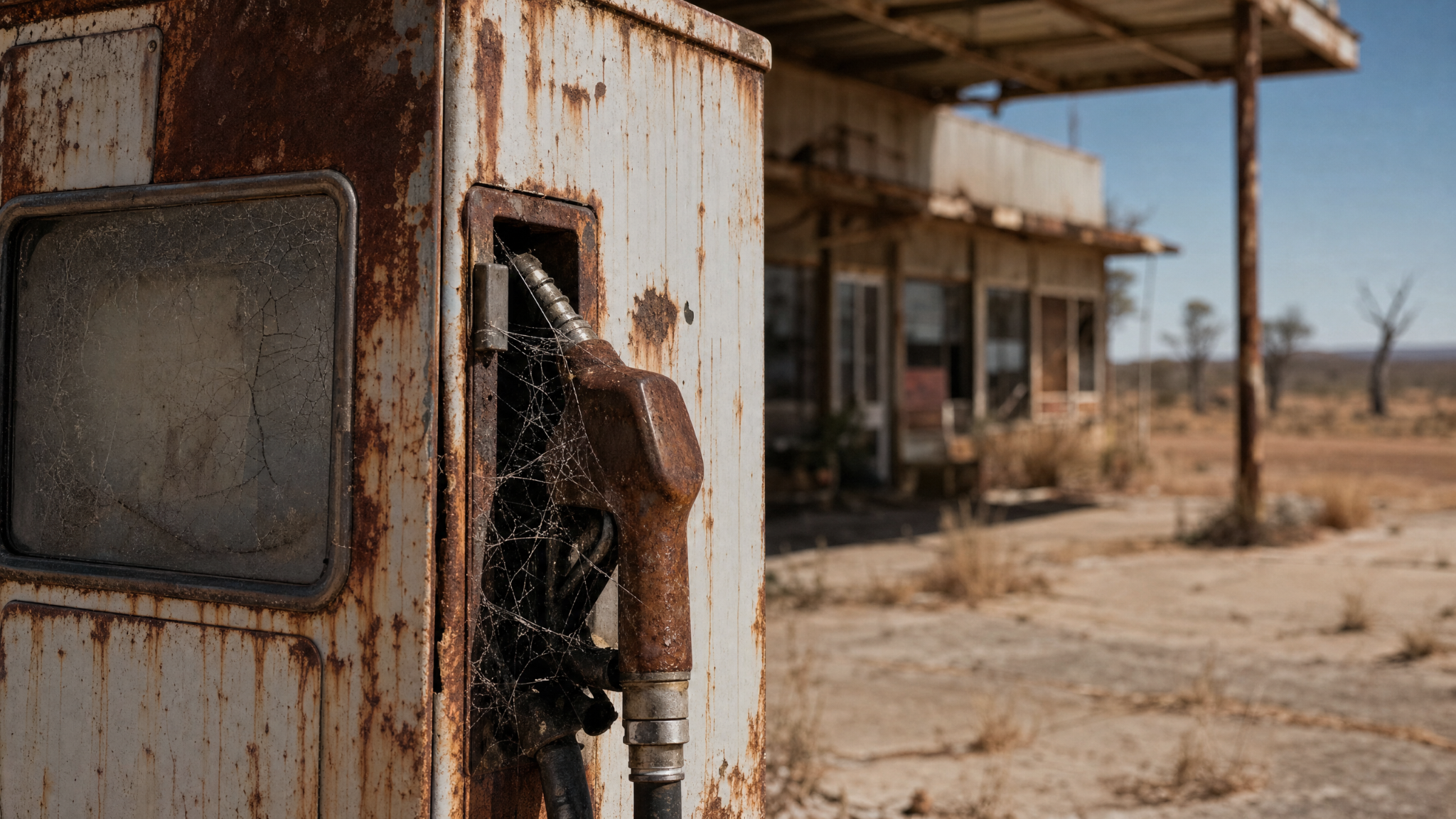
Something extraordinary is happening beneath Australia's headline EV sales numbers. The petrol and diesel car isn't merely losing market share. There are signs its century-long growth may actually be over.
For more than a century, there was one fairly safe prediction you could make about Australia's car fleet.
Next year, there would be more petrol and diesel cars.
More people bought cars. More cars joined the road. And almost all of them needed a petrol station.
Electric vehicles were supposed to change that eventually.
Eventually may have arrived.
Something potentially historic is now appearing in the Australian numbers. EV sales are accelerating, plug-in vehicles are taking a much larger share of new-car sales and — most significantly — there are indications that the actual number of combustion-powered vehicles on our roads may have stopped growing.
Not their percentage.
Their number.
If that holds, it's a considerably bigger story than another monthly EV sales record. It would mean Australia has passed peak ICE.
Australia wasn't supposed to lead this.
Australia is a particularly interesting place for this change to emerge. For years we were behind many comparable markets on vehicle emissions regulation.
That changed with the introduction of the New Vehicle Efficiency Standard — NVES. It doesn't mandate electric cars. Nor does it ban petrol cars. But it changes the mathematics.
And it arrived at almost exactly the same time as something else changed.
The cars got better.
The price problem is disappearing too.
Early EVs asked buyers to make compromises. Limited range. High prices. Slow charging. Questionable infrastructure. Sometimes all four.
The modern EV market looks very different. Range is increasing. Charging speeds are improving. Competition has intensified. New manufacturers — particularly from China — are attacking one of the remaining barriers to EV adoption: price.
BYD, Geely, Leapmotor, XPeng, Zeekr and others aren't treating the electric car as an expensive technological experiment. They're treating it as a car.
Established manufacturers have responded.
This is no longer Tesla versus everyone else. It's everyone versus everyone.
Then something changed in the numbers.
Monthly sales records are interesting, but they can also be misleading. One spectacular month doesn't necessarily tell us much.
What deserves closer examination is evidence that the absolute number of combustion-engine vehicles in parts of Australia may have peaked and begun to decline.
If confirmed as a sustained trend, that's the one to watch. Because market share can fall while the underlying market continues to grow. But when more combustion vehicles are being retired than added?
That's declining population. And that's something else entirely.
It doesn't mean petrol cars are about to disappear. It doesn't mean every Australian wants an EV. And it doesn't mean an electric car is automatically better than a petrol car.
It isn't.
WATTCAR isn't here to convince anyone to buy an EV.
We tell the facts. You can decide.
The hybrid complication.
Australians have embraced conventional hybrids in large numbers. Plug-in hybrids complicate things further. Some now offer enough electric capability for owners to complete much of their everyday driving without starting the engine.
That's why WATTCAR doesn't simply divide the world into EV good, petrol bad.
If you can't plug it in, it isn't a WATTCAR. And plugging it in needs to matter.
This isn't necessarily bad news for the car industry.
It's tempting to frame all this as new manufacturers defeating old manufacturers. That's too simplistic.
The established automotive industry has enormous engineering capability, manufacturing expertise, distribution networks and some of the strongest brands in the world.
The arrival of new competition doesn't diminish those companies. It challenges them.
If the result is better cars, more choice, faster innovation and lower prices, consumers win.
The petrol car isn't being banned out of existence.
It may simply be getting outcompeted. Ultimately there is a powerful force behind all of this: people buying cars.
If an electric car becomes cheaper to run, easier to live with, more enjoyable to drive and comparable in purchase price to the petrol alternative, buying one stops being an environmental statement.
It becomes a purchasing decision.
Peak ICE.
For generations, every technological change in the Australian car market happened while the combustion fleet itself continued growing.
Underneath all those revolutions, one thing remained constant.
The number of combustion cars kept going up.
If that has stopped, we've crossed a line. Perhaps only just. Perhaps unevenly. We may not recognise the year of peak ICE when it happens.
It may already have happened.
The petrol car isn't dead.
Millions will remain on Australian roads for decades, and some very good ones are still being built. Nor has the electric car won some imaginary war.
Something more interesting is happening. The market is changing. The technology is improving. Competition is exploding. Prices are moving. Regulation has changed. And Australian buyers are making different decisions.
For more than a century, the combustion-powered car fleet had only one direction. Up.
If the latest numbers withstand scrutiny, that era may finally be ending.
The day Australia reached peak ICE — and nobody noticed.