BYD sells electric family cars to people watching their budgets. It also makes this.
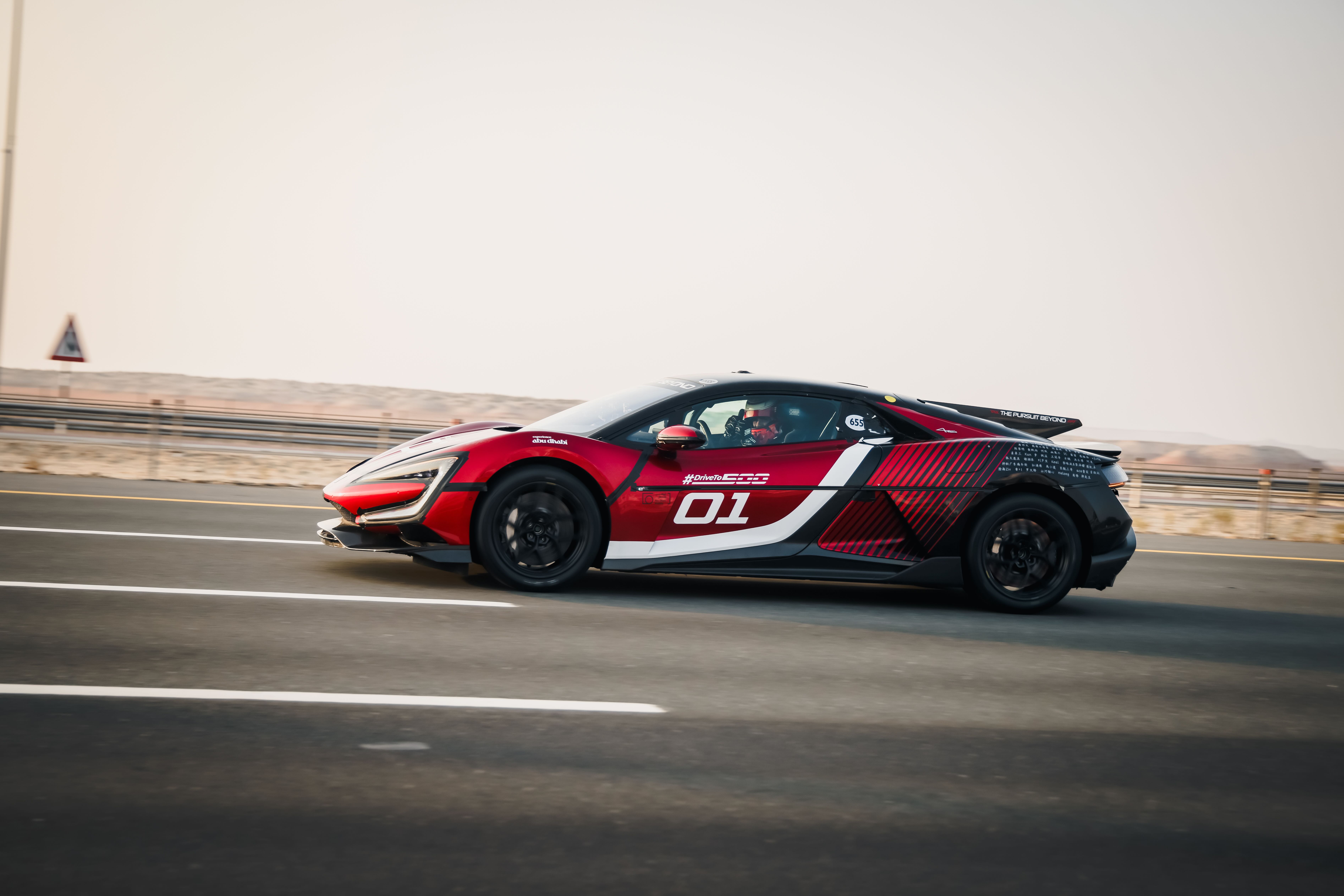
The Yangwang U9 Xtreme has reached 503.17km/h. At that speed, it covers almost 140 metres every second. A kilometre disappears in a little over seven seconds.
The achievement deserves attention. So does the company behind it.
Yangwang is BYD’s luxury brand, and on 1 November German racing driver Marc Basseng took its electric hypercar beyond 500km/h on a closed section of the E11 highway in Abu Dhabi. The Fédération Internationale de l’Automobile (FIA), motorsport’s governing body, recognised the speed. It surpassed the same model’s 496.22km/h benchmark set in Germany in September 2025.
This is a considerable distance from the school run.
WHAT THE RECORD ACTUALLY MEANS
Guinness World Records lists two achievements: the highest speed reached by a production car in a single-direction run, and the equivalent record for an electric production car.
Those last few words matter. This was a peak speed travelling one way, rather than an average of runs in opposite directions. Two-way testing helps account for wind and gradient, so the records are not interchangeable.
Guinness says the result was checked using calibrated VBOX measuring equipment, with an FIA representative reviewing the data.
That qualification does nothing to make 503.17km/h ordinary. It simply tells you what was measured.
POWER IS ONLY THE START
BYD quotes four electric motors delivering a combined 2220kW, supported by a 1200-volt electrical architecture. Each motor can spin to 30,000 revolutions per minute.
Impressive numbers. But generating power is only part of the problem when a car is moving this quickly. Tyres, aerodynamics, cooling, suspension and the road surface all become critical.
BYD says the team reached 490km/h on the previous day, then adjusted battery and motor preparation, rear-wing settings, suspension control and tyre pressures before returning for the successful attempt.
Even cleaning the road became an engineering concern. According to BYD, the route was checked for stray wire fragments left by sweeping brushes. At these speeds, a small piece of debris is a serious matter.
It is the less glamorous detail behind a spectacular headline: a remarkable car still needs meticulous preparation and a driver prepared to trust it.
THIRTY CARS. A MUCH BIGGER MESSAGE.
BYD says production will be limited to 30 examples. This is an exclusive demonstration of capability, rather than a preview of what your next family hatchback will do.
Nor does a hypercar record prove that every car from the same company has the best ride, the clearest controls or the most dependable ownership. Those things still need to be assessed model by model.
What it does challenge is the assumption that Chinese manufacturers compete mainly by making familiar things cheaper.
Here is BYD investing in something difficult, expensive and technically ambitious. The point is to demonstrate what it can engineer, and to make the rest of us reconsider the boundaries we have drawn around the brand.
There is a long tradition of carmakers building extraordinary machines to change how people see their ordinary ones. BYD understands the assignment.
Nobody needs a 503km/h car for the morning commute. That has never been the full explanation for a machine like this.
The road was closed for the attempt. A few minds might have opened.
Images: BYD / Yangwang manufacturer publicity photography from the Abu Dhabi record programme.