There are easier ways to make money than starting an electric car company.
Polestar has spent the past few years providing fairly compelling evidence.
It lost US$2.357 billion in 2025. America has effectively closed the door to new Polestar model-year 2027 cars. Competition from China has gone from intense to slightly ridiculous. And the company has spent much of its short life answering a question car companies generally prefer not to hear.
Will you actually survive?
And yet, inconveniently for anyone preparing the obituary, Polestar keeps making interesting cars.
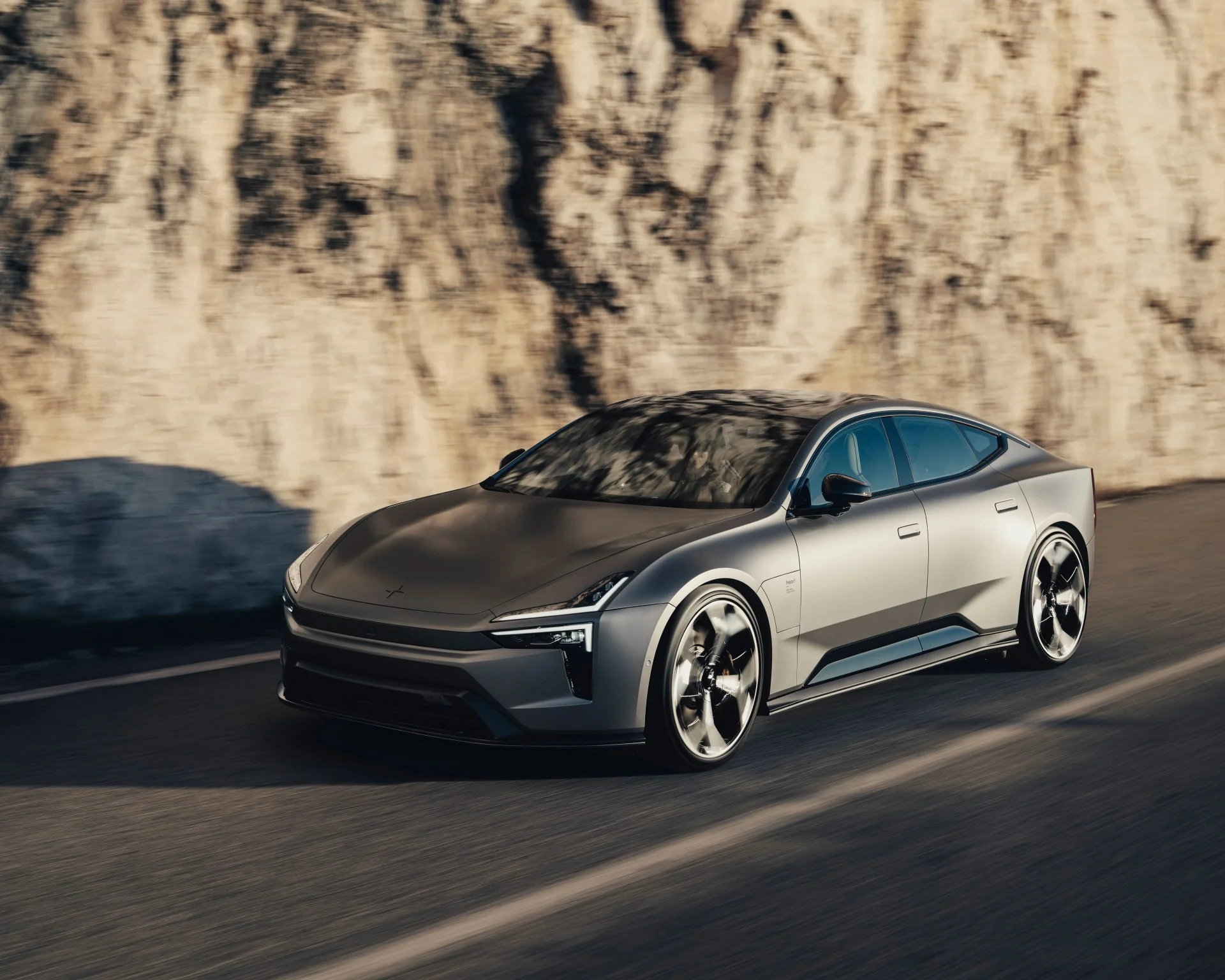
Now there is the Polestar 5.
And this one might matter.
First, the bad news. Because pretending it did not happen would be silly.
Polestar's 2025 revenue passed US$3 billion and retail sales reached a record 60,119 cars, up 34 per cent. Unfortunately, the same accounts contained a US$2.357 billion net loss. Around US$1.05 billion of that reflected net impairment expenses, so the headline needs context, but there is no version of a US$2.357 billion loss that belongs in the good-news column.
The first half of 2026 was more complicated again. Retail sales edged up to a record 30,423 cars and the retail network grew 39 per cent year on year. Reported operating loss fell 43 per cent, helped by the absence of the large impairment charge that hit the previous period.
But revenue slipped 4.4 per cent. Adjusted gross margin was negative 8.5 per cent. Polestar still lost US$842 million in six months.
Progress, then.
Not salvation.
America has added another problem. US connected-vehicle rules mean Polestar cannot sell new model-year 2027 vehicles there. Existing cars can still be supported, but for a global premium brand the symbolism is hardly subtle.
Polestar says the US operation was not profitable anyway. Fair enough. Getting thrown out of a party you were not enjoying is still getting thrown out of the party.
Which makes what is happening elsewhere rather more important.
THE FUNNY THING IS, THE CARS ARE GOOD.
This is where the Polestar story becomes awkward for anyone who wants it neatly filed under EV start-up failure.
We like the product.
Not uncritically. Not because the badge is minimalist and the showroom has nice concrete. Because Polestar has consistently shown a point of view.
The Polestar 2 is getting on a bit now, but it remains one of the more convincing driver's EVs. It looks like a car rather than an aerodynamic household appliance. It has a properly distinctive cabin. And in Australia right now, Polestar is advertising eligible MY26 and MY27 examples from $73,900 driveaway, with the final number varying by specification and state.
That deserves a look.
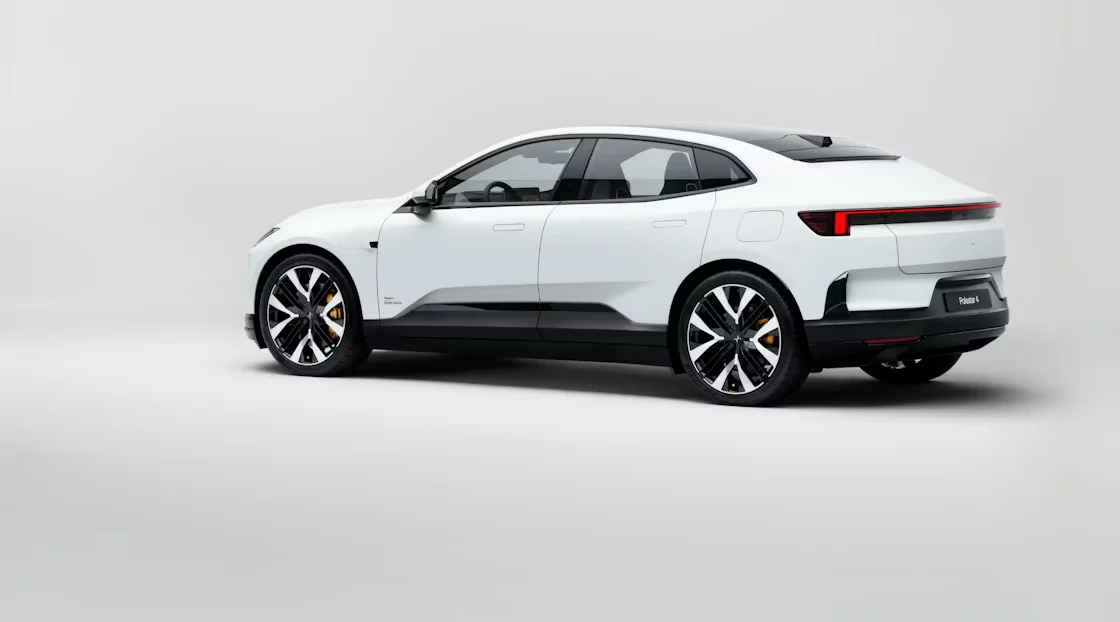
The Polestar 4 is stranger, which we mean as a compliment. It is big, low, quick and has no rear window. Apparently a century of automotive convention was enough.
The current MY27 Rear motor starts at $78,500 before on-road costs, and Polestar is currently offering 0.80 per cent comparison-rate finance on eligible pre-configured MY27 cars, subject to the usual credit conditions, 10 per cent deposit and 36-month term. It has also just been named Best Electric Vehicle Under $90k in the 2026 Drive Car of the Year awards.
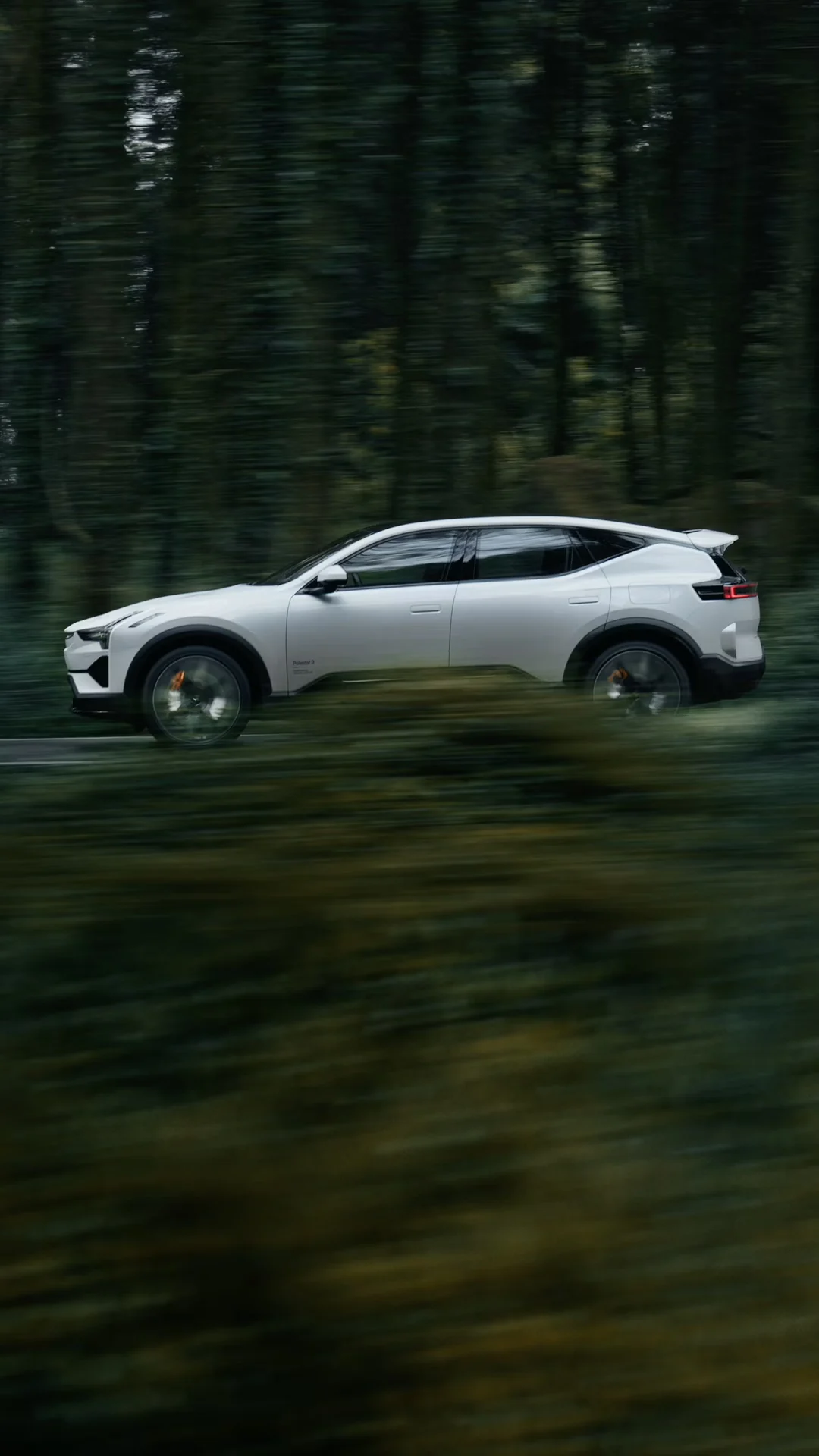
The Polestar 3 sits further up the tree. It is expensive, but it also feels like the sort of premium EV that should be compared with premium German SUVs rather than excused as another newcomer. Polestar is currently offering eligible MY27 buyers a $14,400 contribution towards stepping from the Rear motor to Dual motor or Performance.
Discounts and finance deals are not evidence of corporate health. Sometimes they mean exactly the opposite.
But good cars at sharper prices are relevant to Australian buyers.
And at WattCar, buyers matter more than balance-sheet theatre.
SAME FAMILY. VERY DIFFERENT CHILDREN.
There is another reason Polestar's future is interesting.
Zeekr.
Both live inside the sprawling Geely universe, although the corporate structures are different. Zeekr became a wholly owned subsidiary of Geely Automobile at the end of 2025. Polestar remains separately listed, with major Geely-linked ownership and Volvo Cars holding about 19.9 per cent after its 2026 debt-to-equity conversions.
In Australia, that increasingly means cars from the same extended family competing for the same driveway.
The difference is personality.
Zeekr is expanding with the confidence of a company that has somewhere to be. Big technology, fast charging, aggressive product development and increasingly serious global ambitions.
Polestar feels more European in temperament. Cleaner. More restrained. More obsessed with how the thing looks and feels than with winning every specification-sheet arm wrestle.
Neither approach is automatically better.
But it does raise a very useful question.
In a Geely family already containing Zeekr, Volvo, Lynk & Co and Lotus, why does Polestar need to exist?
The Polestar 5 may be the best answer yet.
AND THEN THEY BUILT THIS.
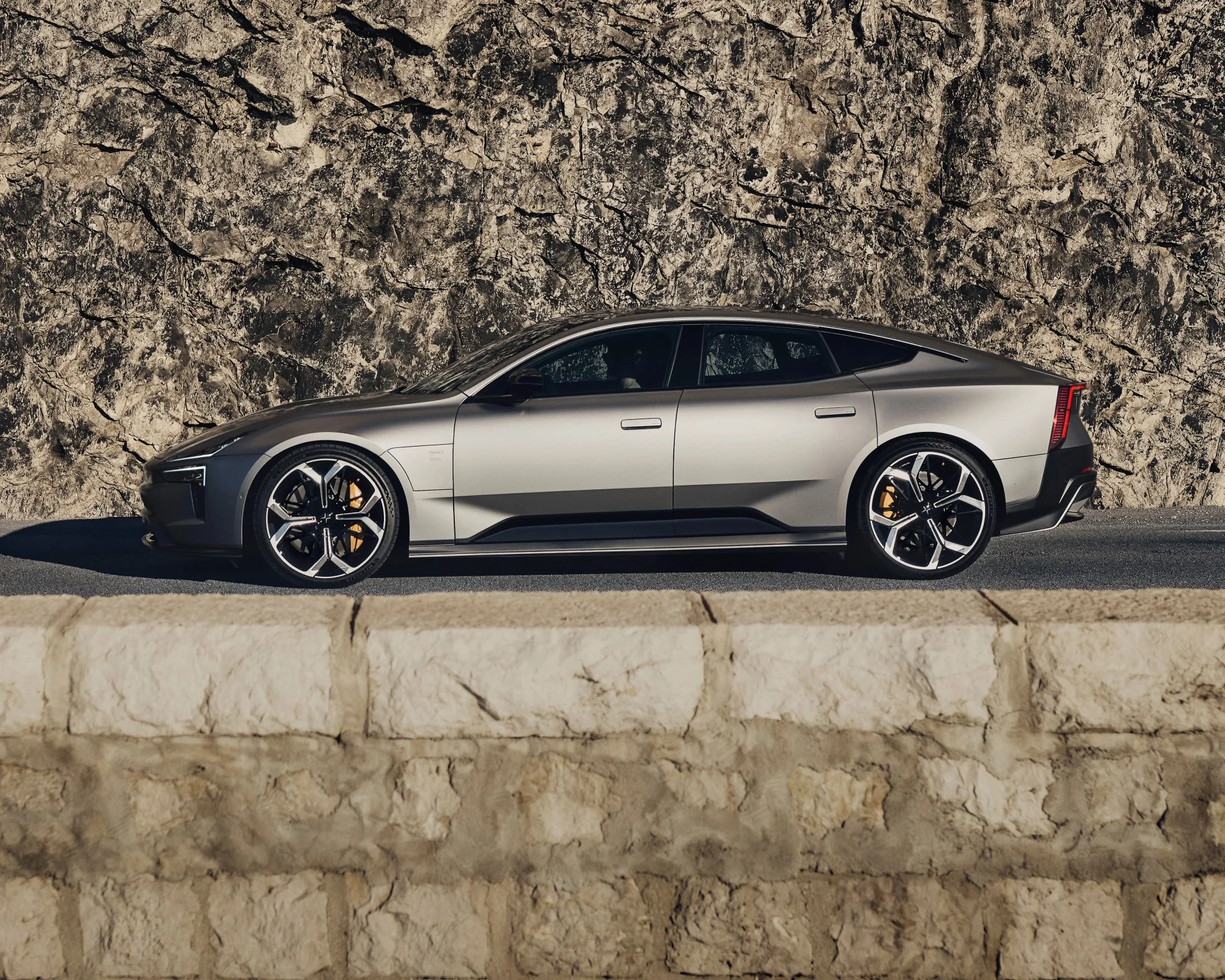
The 5 began life as the Precept concept. Six years later, remarkably, much of the idea survived contact with production engineers.
It is a 5.1-metre electric grand tourer built on Polestar's own bonded-aluminium architecture, developed in-house rather than borrowed from another branch of the Geely family.
That matters.
The Dual motor produces 550kW and 812Nm. The Performance lifts that to 650kW and 1,015Nm. Zero to 100km/h takes a claimed 3.9 seconds in the former and 3.2 in the latter.
We have reached the point where an 884-horsepower family-sized electric car is almost normal, which is probably something historians will enjoy explaining.
More interesting to us is the engineering underneath it.
The 5 uses an 800-volt electrical architecture and a 112kWh battery. Australian specification lists a target WLTP range of up to 678km for the Dual motor and 558km for the Performance. Peak DC charging is 350kW, with Polestar claiming 10 to 80 per cent in 22 minutes under suitable conditions.
Those are serious numbers.
They are also claims we would like to test.
Because a 350kW peak means less to an owner than what the car can sustain through an actual charging session. And 678km on a laboratory cycle becomes much more useful when we know what happens at 110km/h, with luggage, weather and an air-conditioner involved.
That is why the 5 belongs in the WattCar conversation.
Not because the brochure is impressive.
Because there is something here worth finding out.
THE PEOPLE WHO HAVE DRIVEN IT SEEM RATHER HAPPY.
We have not driven the Polestar 5 yet, so we are not going to borrow somebody else's road test and pretend it is ours.
But independent first drives are encouraging.
Top Gear called it a car with the ability to make the Porsche Taycan watch its back, praising its speed, steering, chassis and the fact that a great deal of development work is evident in the finished car. CarExpert's Australian-market drive was similarly enthusiastic about the chassis and refinement.
That is useful evidence.
It is not a WattCar verdict.
For that, we need the keys.
Australian pricing starts at $171,100 before on-road costs for the Dual motor and $193,100 for the Performance.
That is serious money. It also places the 5 below some obvious German rivals while offering extraordinary power and a bespoke platform.
Whether that makes it good value is something we would rather decide after several days in the car than several minutes with a calculator.
SO, IS POLESTAR BACK?
Too early.
Companies are not rescued by handsome cars, big batteries or 650 kilowatts. Eventually they have to make money.
And Polestar still has some uncomfortable numbers attached to its name.
But perhaps "Is Polestar back?" is the wrong question.
The more interesting question is whether there is still room in the electric-car market for a smaller premium brand with a very clear idea of what it wants to be.
We think there is.
The current Australian range helps the case. The 2 still has appeal. The 4 is genuinely distinctive and currently well positioned. The 3 deserves more attention than it gets. And the 5 looks like the first Polestar capable of explaining the entire brand in one object.
That does not fix the balance sheet.
It does remind us why the company is worth fixing.
Polestar has spent a few years looking like a very good design and engineering idea attached to a difficult business model.
The 5 does not prove the business model works.
But it makes us rather glad nobody has switched the lights off yet.
Not dead yet, then.
Good.
ADDENDUM: Volvo’s struggle.
Volvo’s latest losses, further job cuts and EX60 production delays matter to Polestar. Volvo remains a lender and is the planned development and manufacturing partner for the Polestar 7.
That adds uncertainty around future support and delivery of new models. It does not establish a Polestar delay or a change to Australian warranties or servicing.
Geely’s backing remains important. But “Volvo is behind it” now needs a qualification: Volvo has a turnaround of its own to deliver.